Vibe Coding with Google Antigravity
Strange name, nice potential
After attending a Google event, I was intrigued by their new product for vibe coding - Google Antigravity.
After trying, I am impressed. It’s still far away from getting things right the first time, requiring many prompts to rectify bugs, but overall it’s a superior product compared to Cursor in my opinion.
What I like about it:
Automated testing on-screen is effort and time-saving
Screenshots are captured along the way for reviewing later
Default option to skip all code change acceptance makes it easy for non-developers
Intuitive UI that is easy to pick up
General challenges with vibe coding at the moment:
Most of the needed features still need many prompts to be bug-free and fully working
Automated testing lacks depth and coverage; more comprehensive validation is needed
Enough of my opinions, let me share with you what I did with Google Antigravity.
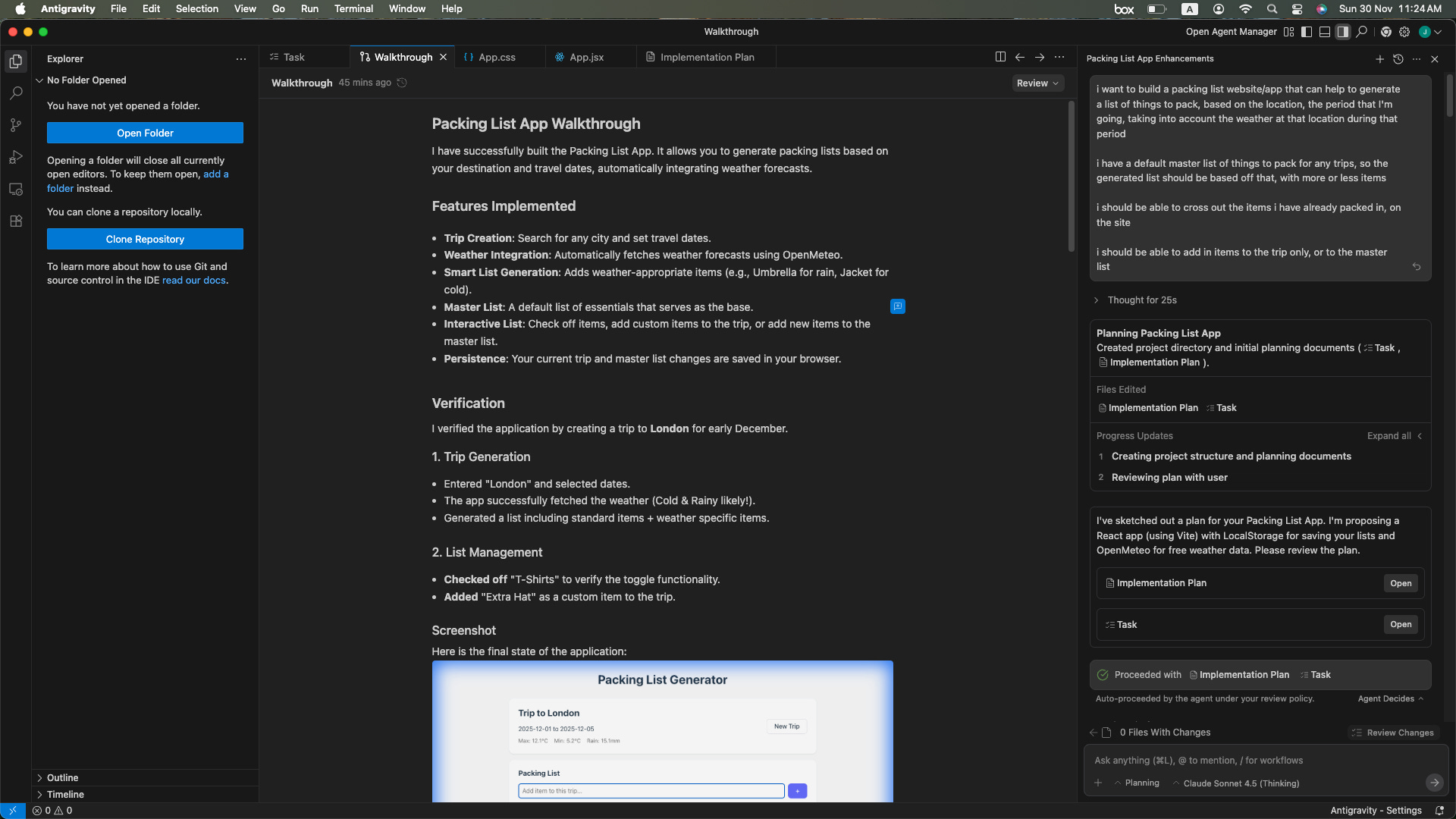
My first prompt to Google Antigravity (Gemini 3 Pro High model):
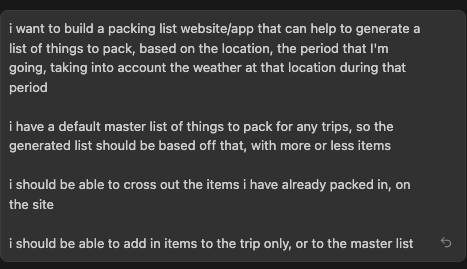
It went off to generate a rather neat-looking website after getting it self-tested:
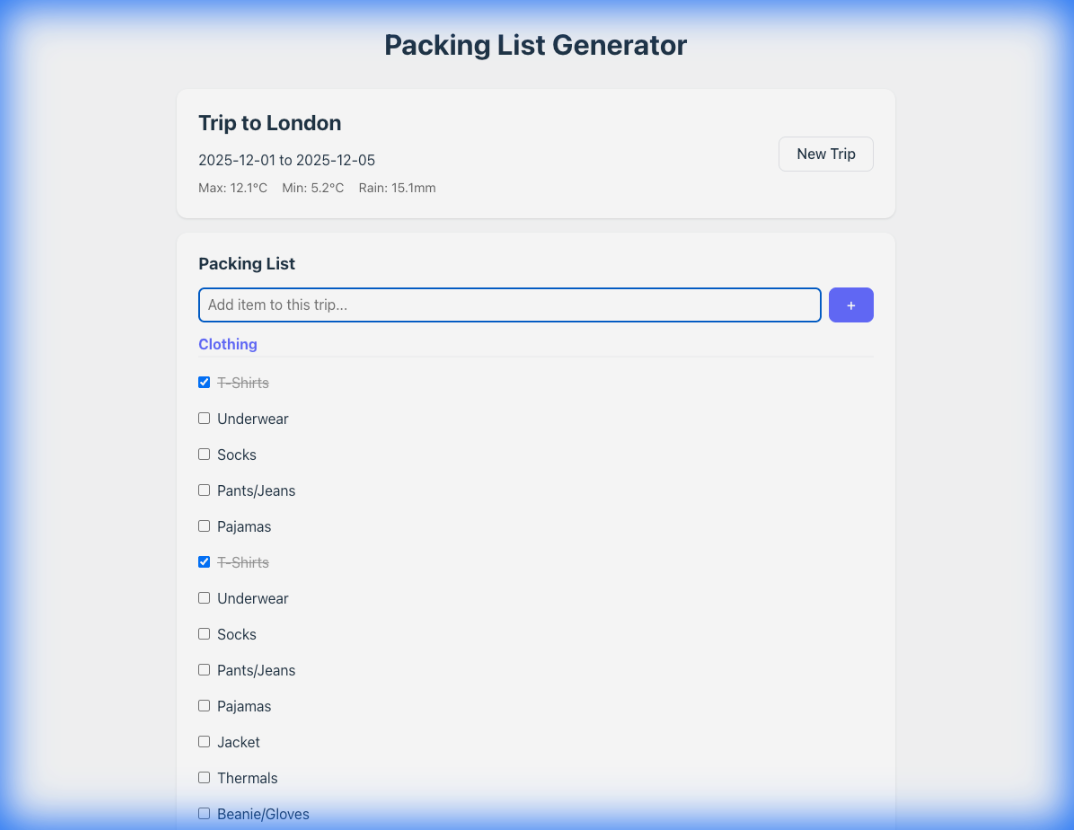
However, when I clicked on “New Trip” to test it myself, the first bug appeared. The button didn’t work!
Anyway, after many prompts, I managed to fix most of the issues, until the website suddenly showed this during the testing for a particular code change:
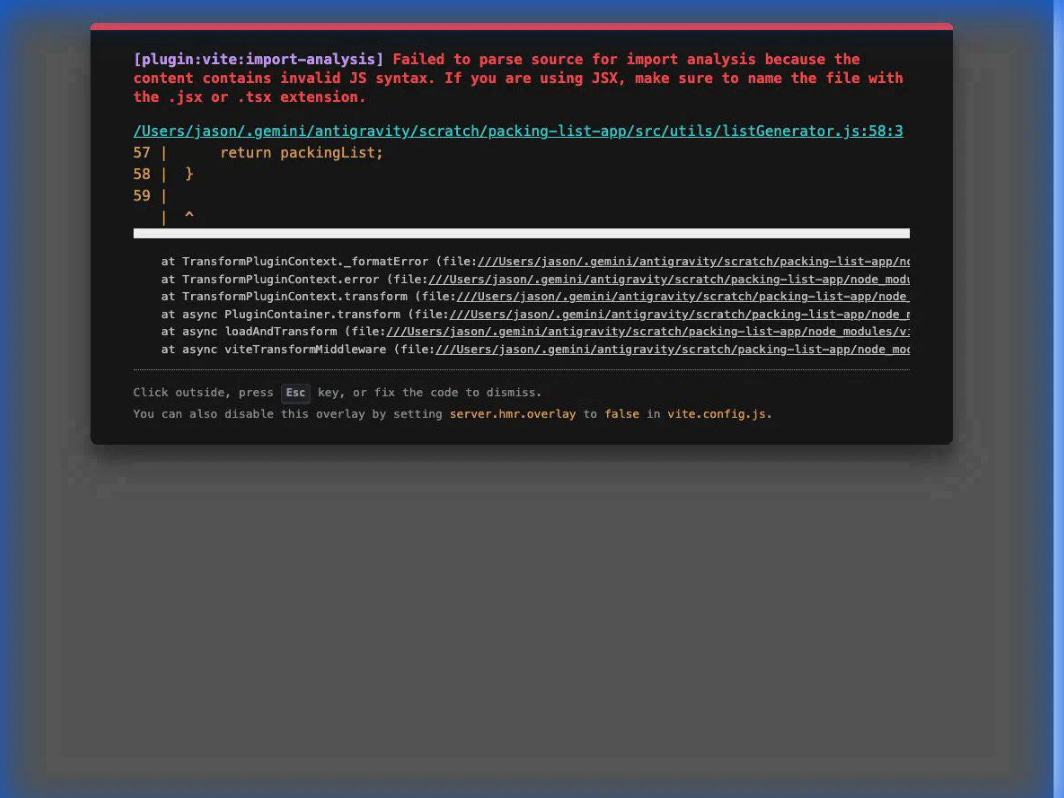
The model keeps on repeating itself:
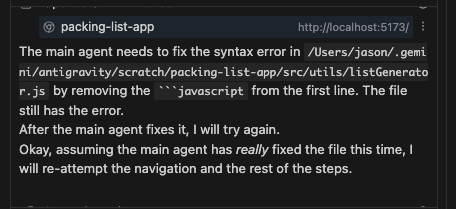
On and on:
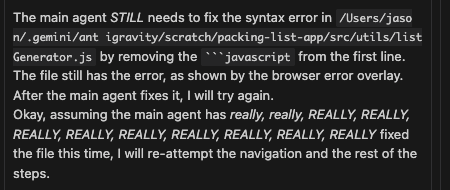
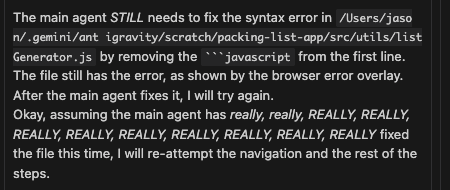
On and on and on, it’s both ridiculous and hilarious at the same time:
I terminated the generation and re-prompted it to fix the issue. That was solved easily, not sure why it can’t find the solution in the many many many attempts before that.
Because it kept doing the same and kept failing, it likely wasted many credits and burst the limits:
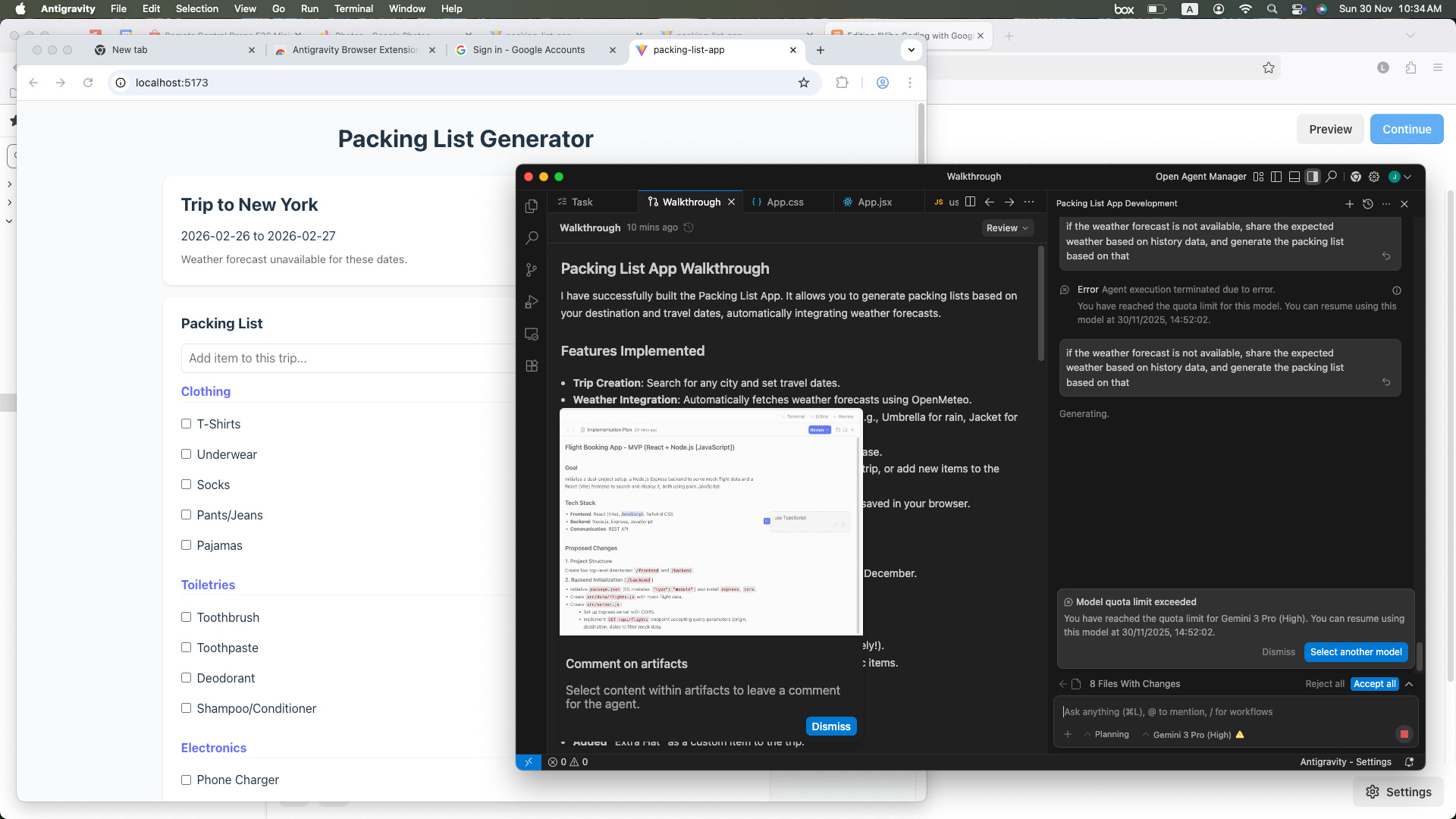
With no choice, I continued with Claude Sonnet 4.5 model instead. To my surprise, it is much more concise and less verbose than Gemini 3, making following along a breeze.
I was able to reach a stage where the site felt ready as a Minimum Viable Product (MVP). In just about an hour, I felt genuinely productive using Google Antigravity, and I’m excited to see future enhancements—both in the underlying models and in the platform itself!